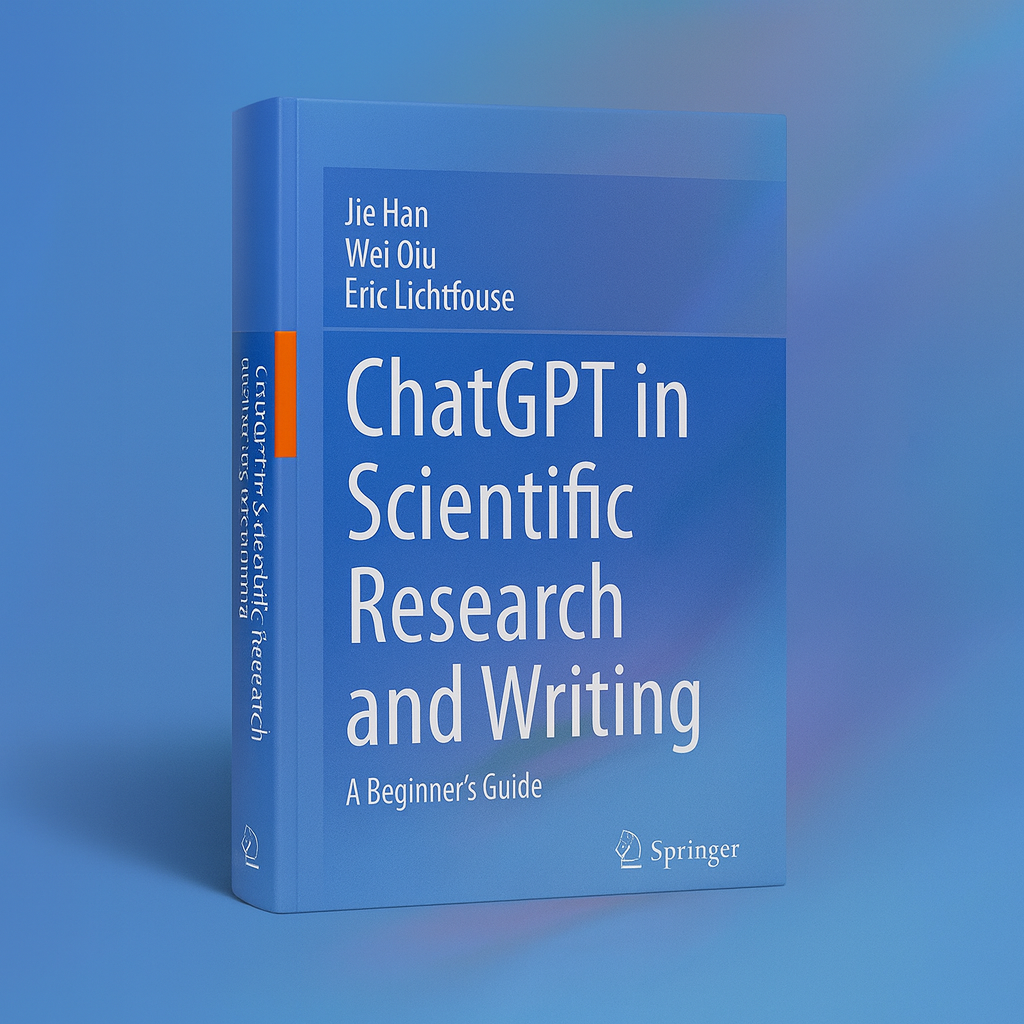
ChatGPT in Scientific Research and Writing: A Beginner’s Guide
Publisher: Springer
৳ 500.00
Book Features & Quality
Premium Paper: Off-white Karnaphuli paper, 80 GSM
Perfect Size: B5 (a little smaller than A4 but bigger than standard books)
High-Quality Print: Computer printed, sharp and clear fonts
Durable Binding: Forma binding, strong and long-lasting
Elegant Cover: Paperback, portable and attractive design
Comfortable Reading: Ideal for eye comfort
- Explains how AI tools like ChatGPT can support scientific research and writing
- Shows how to brainstorm research topics and refine research questions
- Guides readers in structuring ideas and building clear outlines
- Explains how AI can help draft and revise academic manuscripts
- Shows how to summarize and organize academic literature
- Helps improve clarity, style, and academic tone in writing
- Introduces AI-assisted support for data analysis and visuals
- Designed for beginners with no AI or coding background
- Explains AI as a support tool, not a replacement for researchers
- Emphasizes critical thinking and human oversight in AI use
Who Should Read This Book
- Undergraduate students doing research projects
- Master’s and PhD students writing theses or dissertations
- Academic researchers across all disciplines
- Early-career scholars managing heavy workloads
- Researchers preparing proposals and grant applications
- Academics writing journal articles or conference papers
- Teachers and scholars balancing teaching and research
- Beginners curious about AI in academic work
- Anyone wanting to use AI responsibly in research
Why This Book Matters
- Responds to growing academic workload and time pressure
- Makes AI-assisted research simple and approachable
- Provides step-by-step guidance for responsible AI use
- Encourages ethical and transparent research practices
- Helps researchers work faster without losing quality
- Supports creativity and idea development
- Protects scholarly integrity and methodological rigor
- Clarifies limits and risks of AI in research
- Positions AI as a research assistant, not a substitute
Title | ChatGPT in Scientific Research and Writing: A Beginner’s Guide |
|---|---|
Authors | |
Publisher | |
Edition | 1st |
Number Of Pages | 140 |
Jie Han, Wei Qiu, and Eric Lichtfouse are innovative scholars who are helping shape the future of scientific research and academic writing through the use of artificial intelligence tools like ChatGPT. Their combined expertise covers scientific methodology, digital writing support, and practical guidance for researchers at all levels.
Jie Han is known for advancing modern approaches to research communication and academic skill development. With experience mentoring students and early-career scholars, Han focuses on practical solutions that make scientific writing more efficient, accurate, and accessible.
Wei Qiu specializes in digital technology for education and research enhancement. Qiu’s work helps researchers understand how AI tools can support critical thinking, improve productivity, and maintain academic integrity throughout the research process.
Eric Lichtfouse is a highly respected researcher and editor of leading scientific journals, with extensive experience in academic publishing and scientific writing. He is widely recognized for guiding researchers on how to communicate complex findings clearly and effectively to the global scientific community.
Together, these authors provide a powerful blend of real-world experience, editorial expertise, and technological insight. Their book, ChatGPT in Scientific Research and Writing: A Beginner’s Guide, shows readers how to responsibly integrate AI into literature review, data interpretation, manuscript drafting, and overall scholarly communication. It offers step-by-step advice, practical examples, and ethical guidelines that support both quality and creativity in academic writing.
For students, researchers, and professionals seeking to improve their writing skills and boost productivity with AI, this book is a timely and reliable resource backed by experts who truly understand the evolving needs of modern science.
Springer is one of the oldest and most prestigious academic publishers in the world, with roots dating back to 1842 when Julius Springer founded the original publishing house in Berlin.
Over many decades, Springer has grown into a global publishing giant. Today it operates internationally under Springer Nature, serving the research community around the world.
- Extensive Scholarly Output & Subject Breadth: Springer publishes a massive volume of scholarly works — including hundreds of thousands of books and thousands of peer-reviewed journals spanning science, technology, medicine (STM), social sciences, humanities, engineering and more.
- Strong Global Reach & Accessibility: With offices and operations spanning continents (Europe, North America, Asia, etc.), Springer ensures its books and journals are accessible worldwide — both in print and digital formats.
- Leadership in Digital & Online Publishing: Springer was among the early adopters of digital publishing. Through platforms like SpringerLink and other online services, researchers worldwide get fast access to e-books, articles, reference works and scientific data — making research more convenient and widely available.
- Legacy of Academic Excellence & Historical Gravitas: Since the 19th century, Springer has published works by leading scientists and scholars. Its long history lends weight and credibility to its publications.
- Commitment to Research Quality and Standards: Through rigorous peer-review, editorial integrity, and high academic standards, Springer ensures that its publications remain reliable, credible, and valuable to scholars, educators, and researchers worldwide.
- Support for Open Science and Accessibility: Under Springer Nature, the publisher has embraced open-access models and digital dissemination, helping broaden global access to scientific knowledge and facilitating research dissemination across borders.
Reviews
There are no reviews yet.